
Originally published in Elmhurst Living (October 2026), a publication by Best Version Media. Written by Jennifer Knox of Midwest Center for Hope & Healing. Republished with permission. Read the original article here.
As a therapist, one of the questions I hear most often is, “What exactly is LENS Neurofeedback?” If you’ve wondered the same thing, here’s a simple explanation.
Q: What is LENS Neurofeedback?
LENS Neurofeedback is a way to help the brain reset itself. After years of stress, anxiety, trauma, illness, or even a concussion, our brains can get “stuck.” LENS is a gentle, non-invasive tool that encourages the brain to become more flexible and better regulated. The brain does the work. I’m just guiding the process.
Q: What does a session feel like?
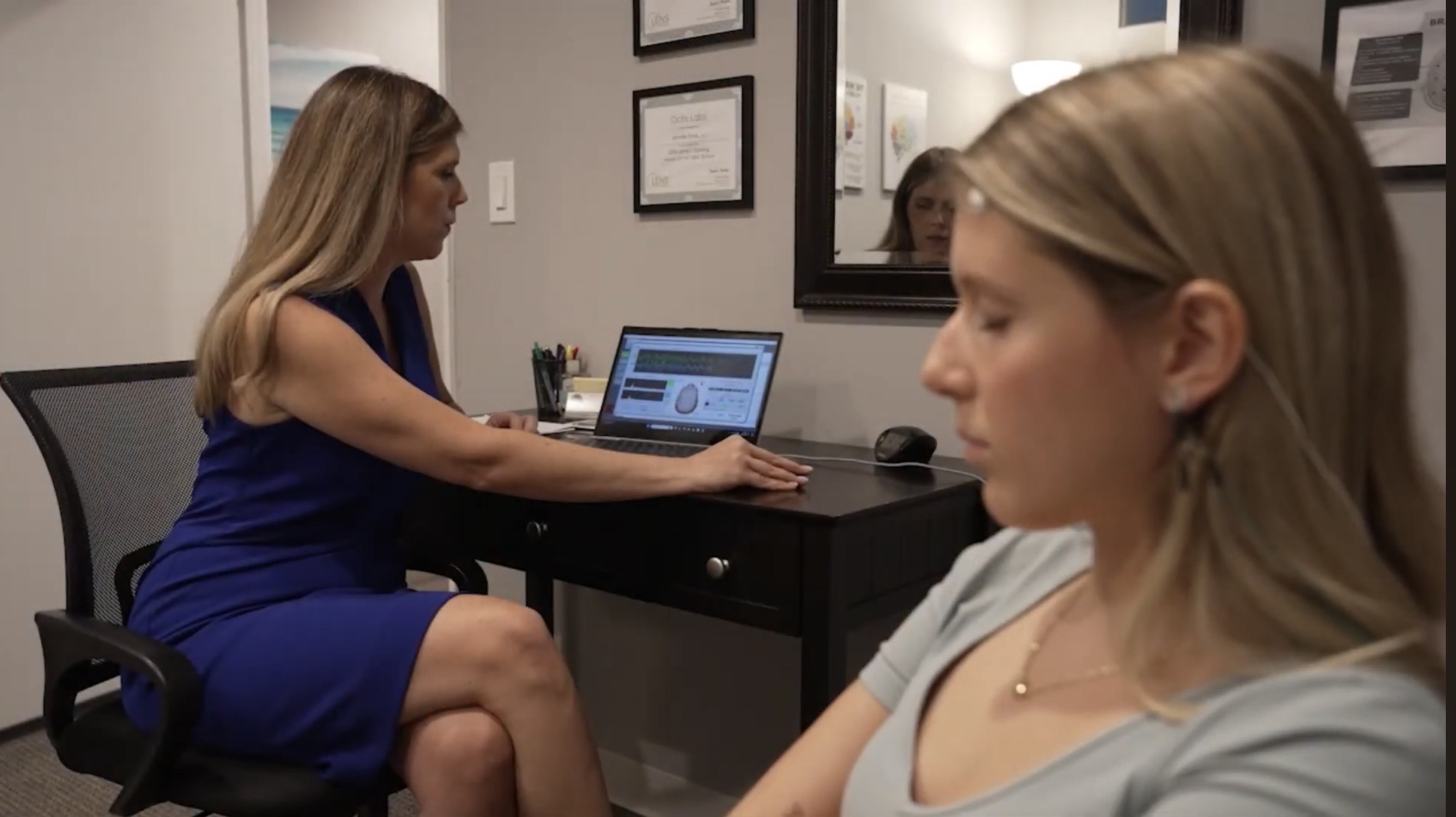
Most people are surprised by how simple it is. Small sensors are placed on your scalp to read your brain’s activity (no electricity goes into your brain). Each round of feedback lasts only a few seconds, and a full session is usually done in a matter of minutes. A lot of people find it relaxing, even a little sleepy.
Q: What kinds of concerns can LENS help support?
LENS isn’t a cure, and it doesn’t replace counseling or medical care. But I’ve seen it help as part of treatment for people dealing with:
- Anxiety and chronic stress
- Depression or low mood
- Trouble focusing or staying organized
- Sleep problems
- Emotional ups and downs
- Symptoms after a concussion or other brain injury
Every brain is different, so every person’s experience is a little different too.
Q: Why do I offer LENS?
I believe healing happens when we look at the whole person, not just the symptoms. So many people come in feeling like they’ve tried everything and are still stuck. LENS gives us another option, a way to support the brain’s own ability to heal and adapt. I often pair it with counseling, since the two together tend to lead to more lasting change.
Q: Is it right for everyone?
Not necessarily, and that’s okay. In our first meeting, we’ll talk through your concerns, your goals, and whether LENS makes sense for you. I’m not trying to sell you on a particular approach just because I offer it. My goal is to help you find what actually supports your mental health and well-being.
You don’t have to stay stuck. Whether it’s anxiety, feeling overwhelmed, or just not feeling like yourself lately, sometimes the brain just needs a little help finding its way back to balance.
By Jennifer Knox, Midwest Center for Hope & Healing